Other 8-year-olds sleep over without a second thought — while you're washing wet sheets at 5am. One mother found what actually stops it.
A ₦9,800 step-by-step guide that shows you exactly what's really behind the wetting — and how to stop it, often within weeks.
🔒 Secure checkout · Instant PDF delivery
You've stopped telling people. That's how you know it's gotten to you.
At first you told yourself it was normal — every child grows out of it eventually. Then a year passed. Then two. Now you've quietly stopped mentioning it, even to your sister, because you're tired of the advice from people whose children never had this problem.
You've tried almost everything anyone has suggested. Waking him up at midnight. Limiting water in the evening. Prayers. A tonic someone's aunty swore by. Nothing has stuck, and some mornings you catch yourself dreading the moment you walk into his room before you've even opened the door.
If any part of that sounds like your house, here's what your mornings might actually look like right now:
- You wake at 2am, reach over to feel the mattress, and your heart sinks before your hand even confirms it.
- You've started drying two sets of sheets on the line every single day, and the neighbours have noticed the pattern even if they haven't said anything.
- Your child came home holding a birthday sleepover invitation and quietly said, "I don't think I can go" — and you didn't know what to tell him.
- You've woken him at midnight, half-asleep, to sit him on the toilet — for months — and nothing has changed.
- Someone in the family has hinted, more than once, that it's "spiritual," or that you're spoiling him, or that you're not being firm enough.
- You've googled this at 1am with your phone brightness turned all the way down so nobody wakes up and asks why you're still up.
It's rarely laziness, spite, or anything spiritual. In most children, it's a combination of a bladder-signal that hasn't matured enough for deep sleep, and a home routine — fluid timing, sleep depth, toilet habits — that's accidentally working against your child instead of for him. Nobody sat you down and explained this part. That gap is what this guide closes.
Here's how one mother found that out — the hard way, after two years of trying everything except the thing that actually worked.
4:47am, a laundry basket, and a decision
I'm not a doctor. I'm a mother who spent two years standing in a laundry room in Lagos at strange hours, holding a bundle of wet sheets, wondering what was wrong with my son — or with me.
He was nine. Old enough that it had stopped being something people found sweet or excusable, and started being something they whispered about. I remember one specific morning clearly: 4:47am, the smell of Dettol, my hands raw from rinsing, and my son's door still shut because I hadn't found the courage to wake him and tell him, again, that it had happened.
By then I had tried almost everything anyone offered me:
Disrupted his sleep for months. The wetting didn't stop — he was just exhausted at school too.
Made him thirstier, and he started sneaking drinks from the kitchen once I'd gone to bed.
He started hiding wet sheets under the bed rather than tell me. The wetting continued — I'd just lost his trust too.
Well-meaning, and I don't regret trying. But nothing about his actual bladder or sleep pattern ever changed.
It solved the laundry problem for a while. It did nothing for the real problem, and I watched it quietly chip away at his confidence.
Nobody could explain to me why it should work. It didn't.
It was my husband's aunt — a retired paediatric nurse everyone in the family calls Aunty Ngozi — who finally said something that changed everything.
"You are treating the mattress. Nobody has treated the bladder. Those are two different problems, and you've spent two years solving the wrong one."— Aunty Ngozi, retired paediatric nurse
She walked me through a routine built around fluid timing, bladder training, and a night schedule I'd never been shown — with none of the shame I'd been carrying for two years. By the fifth week, dry nights weren't the exception anymore. They were becoming the pattern.
Once other mothers in my church group heard what had actually worked, I kept getting asked to explain it over and over — in kitchens, after service, in voice notes at midnight. So I finally wrote it all down, in order, the way Aunty Ngozi walked me through it.
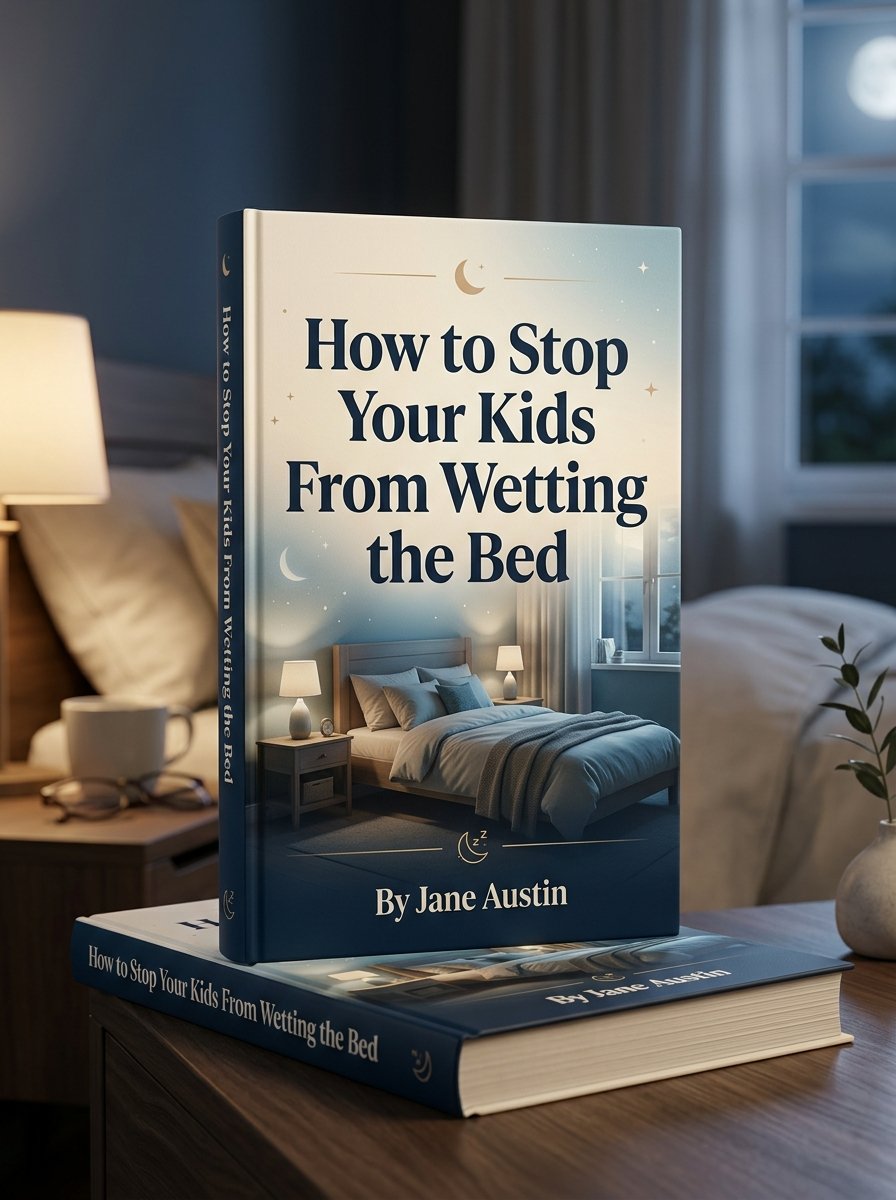
How To Stop Your Children from Wetting The Bed
The exact routine that gets to the real cause — not another folk remedy
This is not a book of prayers or old wives' tales, and it isn't a lecture on being a more patient parent. It's a field manual: an exact daily and nightly routine you follow for a set number of weeks, with a tracker to know if it's working and what to adjust if it isn't.
Everything you need, in the order you need it
Why He's Really Wetting the Bed
You'll finally understand the actual mechanism behind it — not the folk explanations you've been given — so you know exactly what you're correcting.
The Bladder-Training Method
A simple daytime exercise you can build into his normal routine that gradually strengthens the signal his body needs at night.
The Fluid Timing Chart
Exactly when and how much your child should drink through the day — so he stays hydrated without setting himself up to fail overnight.
The Night Routine
A step-by-step wind-down and toilet routine you can start using tonight, without the disruptive midnight wake-ups that wear everyone out.
Talking to Your Child Without Shame
Word-for-word language to use with your child — and with relatives who don't understand — so nobody's confidence gets damaged along the way.
When It's Something Else
The specific signs that mean you should see a doctor rather than continue at home — so you know the difference and never guess.
The Sleepover & School Trip Survival Plan
How to prepare your child for a night away from home confidently, without him feeling singled out or afraid.
The 6-Week Tracker & What To Do If It's Not Working
A day-by-day way to see your progress in black and white, plus troubleshooting steps if your child's case needs adjustment.
Here's exactly what you get today
| How To Stop Your Children from Wetting The Bed (PDF guide) | ₦9,800 |
| Bonus: Printable 6-Week Dryness Tracker | ₦2,500 |
| Bonus: Fluid Timing Cheat Sheet | ₦1,500 |
| Bonus: "What To Say" Script Card | ₦2,000 |
| Total value | ₦15,800 |
🔒 Secure checkout · Instant PDF delivery · 7-day guarantee
Three tools to make the routine easier to stick to
The 6-Week Dryness Tracker
A simple printable chart to mark dry and wet nights, so you can see real progress instead of guessing whether it's working.
Value: ₦2,500 — yours freeThe Fluid Timing Cheat Sheet
A fridge-ready printable showing exactly when your child should drink through the day, at a glance, no re-reading required.
Value: ₦1,500 — yours freeThe "What To Say" Script Card
Exact wording for talking to your child, your mother-in-law, and his teacher — so you're never caught without the right words.
Value: ₦2,000 — yours freeTry it for 7 days. If it doesn't help, you get your money back.
Read the guide, start the routine, and give it a real 7 days. If you don't feel it's helping or it isn't the right fit for your family, send one email and you'll get a full refund — no forms, no argument, no hard feelings.
You're not being asked to trust a stranger with ₦9,800 on faith. You're being asked to try it, risk-free, for a week.
Get The Guide — ₦9,800Before you go
Is this just generic advice I could find for free online?
No. Most free advice online is a single tip — "limit water" or "wake them up" — without the full routine or the reasoning behind it. This guide walks you through a complete, sequenced approach: what to change first, what to change next, and how to tell if it's working.
What if my child is older, or this feels more severe than average?
The routine is written for children 5–12, and the "When It's Something Else" chapter tells you clearly when a case needs a doctor rather than a home routine. If you're unsure after reading it, that chapter will tell you what to look for.
Will this make my child feel more ashamed about it, not less?
The opposite is the whole point. An entire chapter is dedicated to talking about this with your child — and with relatives — without shame. Shame is part of what made this harder in our own house; it isn't something this guide adds to yours.
Does this work if we've already tried everything?
Most families who buy this have already tried several things that didn't work. The routine here is built differently — around the bladder and sleep pattern, not around punishment or restriction — which is usually the piece that was missing.
How fast will I see results?
Every child is different, and the guide doesn't promise a fixed timeline. It gives you a 6-week tracker so you can see whether things are moving in the right direction, and what to adjust if progress feels slow.
What exactly do I get after I pay?
An instant PDF download of the guide, plus the three bonus printables, delivered straight to your email — no waiting, no shipping.
Is ₦9,800 worth it?
Weigh it against what you're already spending — extra sheets, mattress protectors, diapers at an age he shouldn't need them, the mornings you've lost. This is a one-time cost for a routine designed to fix the actual cause.
Two ways tonight can go
✓ Get the guide
- ✓ Start the routine tonight
- ✓ Track real progress over 6 weeks
- ✓ Stop dreading bedtime
- ✓ Have the words ready for family and school
- ✓ Risk-free with the 7-day guarantee
✗ Close this page
- ✗ Same laundry routine tomorrow
- ✗ Another sleepover invitation declined
- ✗ Still guessing what actually causes this
- ✗ Same 2am moment, over and over
You already know which morning you want next week to be.
Get The Guide — ₦9,800